| Status: | Active, open to new members |
| Coordinator: |
Judy Chamberlain
|
| When: | Monthly on Thursday afternoons 2:00 pm-3:30 pm 02 Oct, 06 Nov, 04 Dec 2025. 08 Jan, 05 Feb, 05 Mar 2026 |
| Venue: | Catholic Church Hall |
| Cost: | No extra costs |
Maximum places: Not Limited
Group code: DTT
The Austrian Lakes (March 2026)
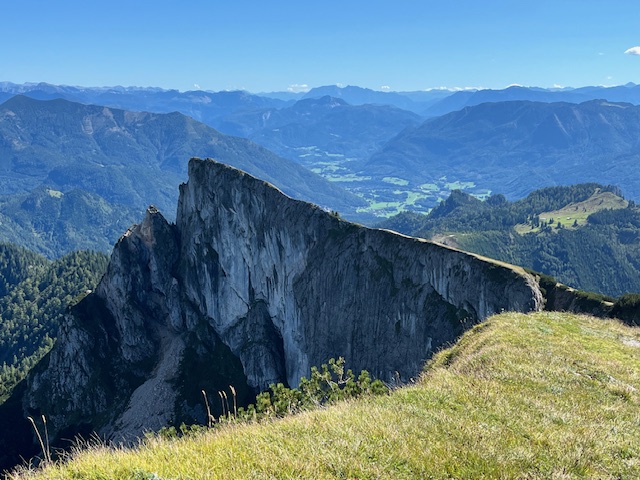
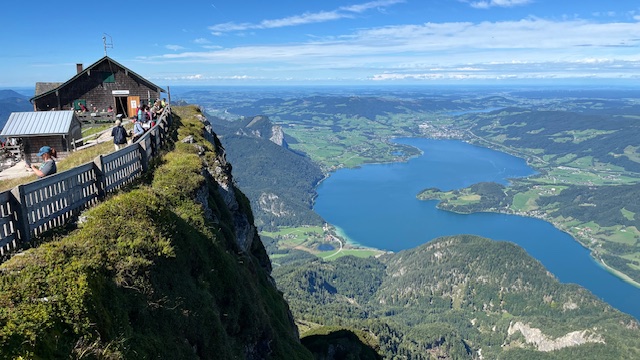
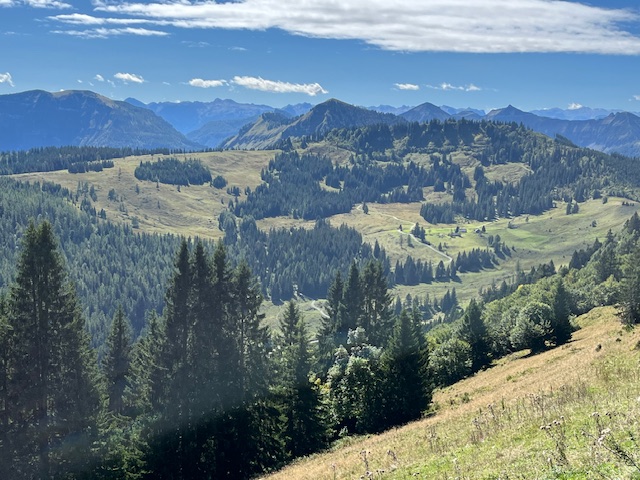
It was a refreshing change to learn about a European country for the final presentation of this academic year. Steve Dwyer took us to Austria, to the Salzkammergut area which includes several of Austria’s nine states and lies in the eastern Alps.
Austria, landlocked by eight countries, has a rich history which Steve concisely outlined for us. It originated as a prehistoric Celtic settlement, then became a Roman Province and evolved as a powerful country under the Habsburgs for almost 700 years until 1918. Many of us remember learning about the successful Austro-Hungarian Empire which collapsed in 1918, when it became a republic until 1938 when it was annexed by Germany in the Anschluss.
Visiting as a package holiday Steve and Elaine flew to Salzburg then transferred to stay in The White Horse Inn in St. Wolfgang, a very picturesque village on Wolfgangsee, but being independent adventurers, they used public transport to explore the local area on their own. Their free transport pass was useful, valid for most transport except the steamer to St. Gilgen at the eastern corner of Wolfgangseee. They enjoyed hiring electric bikes to circumnavigate the lake as far as the terrain would allow, then steamered back to the village.
The green alms (meadow land for cattle grazing) are generally gently undulating, ideal for summer walking, then used for langlauf in the winter months. Higher up the walking terrain is rugged with some path edges precipitously falling away. Only for the very brave-hearted!
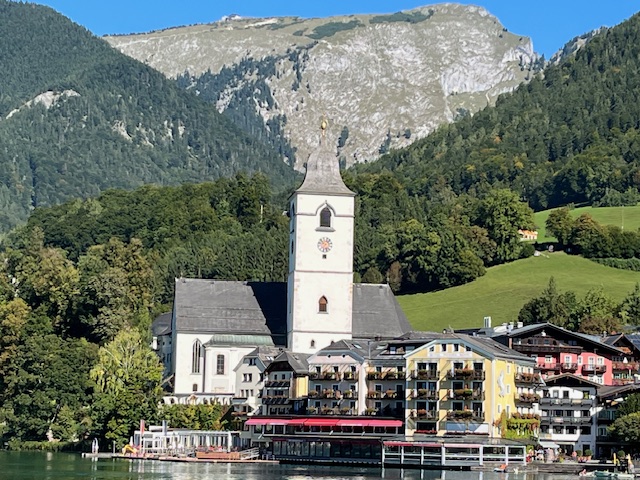
Legend says that St. Wolfgang Church was built where an axe, thrown by the hermit Bishop of Regensburg in 976AD from the Falkenstein landed – divine dispensation we query, but for many years St. Wolfgang became a place of pilgrimage for Catholics! We saw pictures of the beautiful intricate detailed polyptych carved altarpiece. A historic building worth seeing.
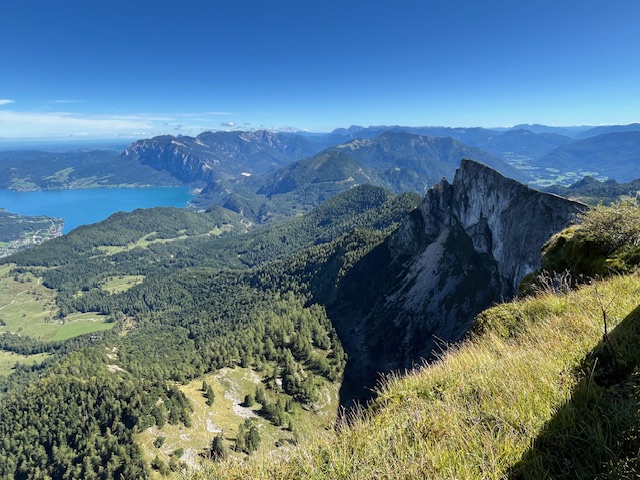
Austrian weather can be mixed, but with the blue sky and sun out Steve had taken wonderful shots of spectacular mountain scenery especially those taken from the summit of the Schafberg mountain, which they ascended on the steepest cog railway in Europe. Panoramic views allowed everyone to imagine they were there and have encouraged some to visit Austria. Thank you Steve and Elaine.
Landlocked in Africa (February 2026)
For our penultimate Travel Talk this academic year, David Barnes, at times with great humour, recounted his visit to the north of Botswana and its border with Zambia.
Beginning on the Zambia/Zimbabwe border we learned about Mosi-oa-Tunya, meaning ‘the smoke that thunders’ in the local language and his photos revealed why. Everyone gets wet, if only by spray! The Zambezi river drops spectacularly at the falls and then progresses through a series of narrow gorges downstream. Despite the drenching, a sight to behold and one that will not be forgotten by anyone who has visited.
Moving on, the local National Park was visited, to see some of the few white rhinos left in Zambia. They were rust coloured, after having rolled in the dust to protect themselves from the fierce sun!


The next stop was Botswana, a short drive from Victoria Falls, and across the Zambezi at the Kazungula Quadripoint where Zambia, Botswana, Zimbabwe and Namibia meet. The base in Botswana was the small town of Kasane which is the gateway to Chobe National Park; not as well known as the famous Okavango Delta, also in Botswana, but just as well populated with animals and birds.
David briefly fleshed out Botswana’s history and its reliance on money generated by diamond mining. He then moved on to the wildlife that can be seen in Chobe, firstly from your hotel room and then those that can be viewed on game drives.


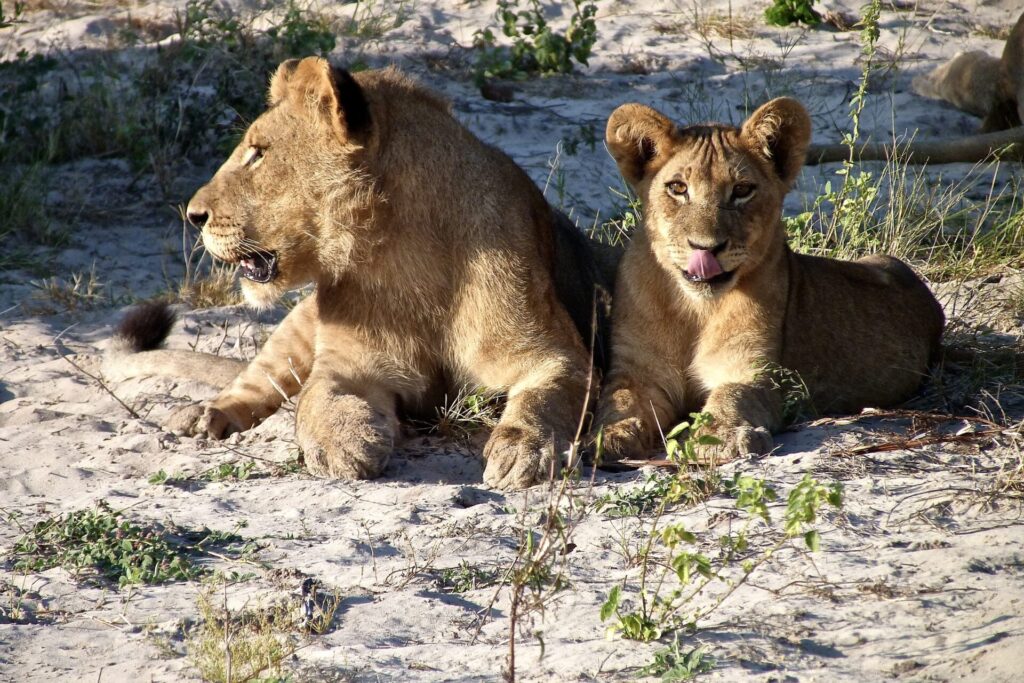

We were treated to photos including various species of antelope, lions, hippos, elephants (Chobe has over 50,000), buffalo, warthogs, mongooses, wild dogs, baboons, plus crocodiles, large monitor lizards and, last but not least, the astonishing dung beetle! We discovered it is the strongest animal in the world relative to its size. Could you push something weighing 200 times more than your body weight - and navigate by the stars at the same time?

Malta (January 2026)

This small, strategically placed island in the central Mediterranean Sea is where member Neil and his wife Denise spent a week in February last year. He began his fascinating talk by posing six questions; the answers to which he needed to reveal at the end, as only one person knew one answer!
We learned that Malta is an archipelago comprised of islands, Malta (the largest) and Gozo and Camino being the main ones. The terrain on all the islands is limestone, still quarried as a building material, which we saw from his photos of buildings lining the picturesque narrow streets in Valletta - the base for their holiday. Despite Malta being advertised as having many sandy beaches this is not really the case; limestone does not crumble to sand!!

Malta has a chequered history going back 7,000 years and is related to a succession of rulers including the Phoenicians, Greeks, Romans, Aragonese, Knights of St. John Hospitallers, the French (Napoleon captured Malta in 1798) and the British from which Malta became independent in 1964, having been a Crown Colony and an important naval base until then. It became a republic just ten years later.
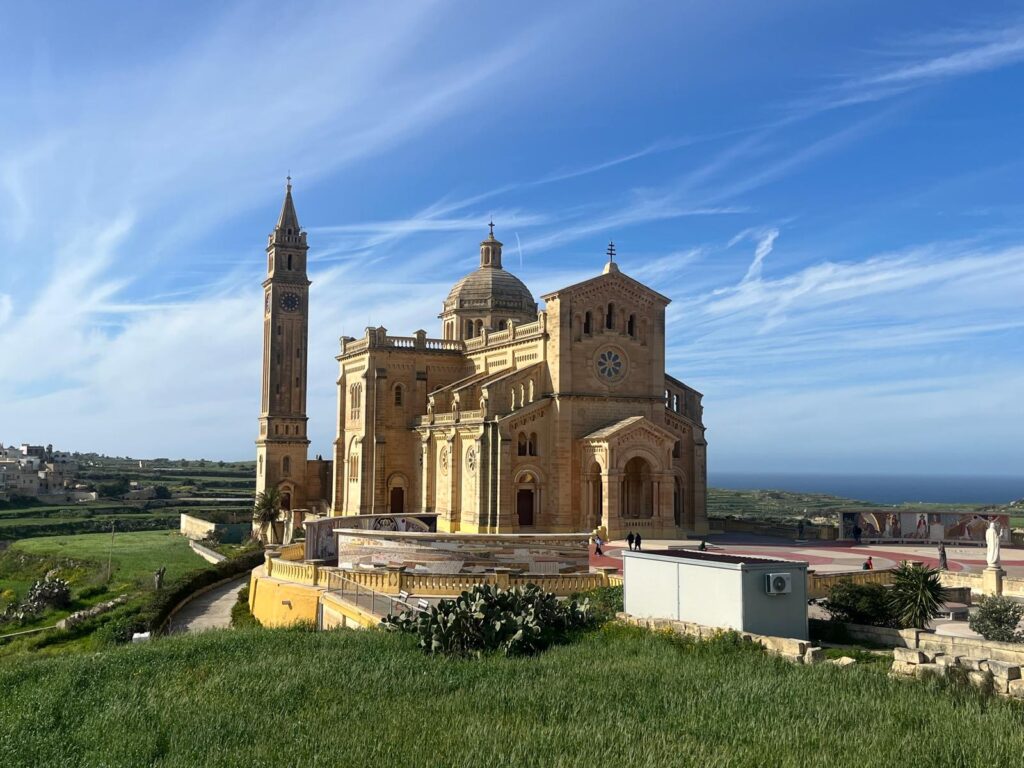
Wanting to learn how Malta has been influenced by history, they took two hop-on-hop-off bus excursions, around the south first and then around the north. A recommendation to anyone wanting to visit!
Malta is very multicultural and multifaith, so there are many churches and places of worship to see, mostly Catholic. Mdina was the ancient fortified medieval capital until The Knights of St. John moved it to Valletta.

With great humour Neil recalled watching the Valletta carnival. His photos were received with laughter as it was an amazing sight to behold with enormous, colourful elaborate floats, in contrast to Gozo’s more British genteel style carnival! The War Museum was another very interesting highlight they visited and we learned about how the islanders managed during their many invasions, the worst being the Siege of Malta during WW2. Taking a ferry across Grand Harbour from Valletta to the area known as three cities was another highlight giving beautiful views back to the capital.

These snippets reflect only a small part of the hours great talk which everyone thoroughly enjoyed.
Japan (December 2025)
Our December talk by member Mark Lodziak about how he and his wife had discovered life in Japan during three visits, really had us learning and laughing! The flight for their first visit was only 11 hours, flying in an arc over Russia. Only a southern route operates now, avoiding conflict areas, but takes between 13 and 14 hours non-stop!
They didn’t travel on a package, but freelanced as their son was teaching English there and could give advice though, because much has changed Mark did advise a package holiday for anyone wanting to go now.


Highlights were many! In Tokyo, on Honshu Island (the largest of the main three) is the Imperial Palace, the Shinto shrine Meiji Jingu, the Buddhist temple Senso-ji, and the world’s tallest (634m) free-standing broadcasting tower, Tokyo Sky Tree. Finished in 2012 it is twice the height of the Eiffel Tower! Very spectacular when illuminated at night.

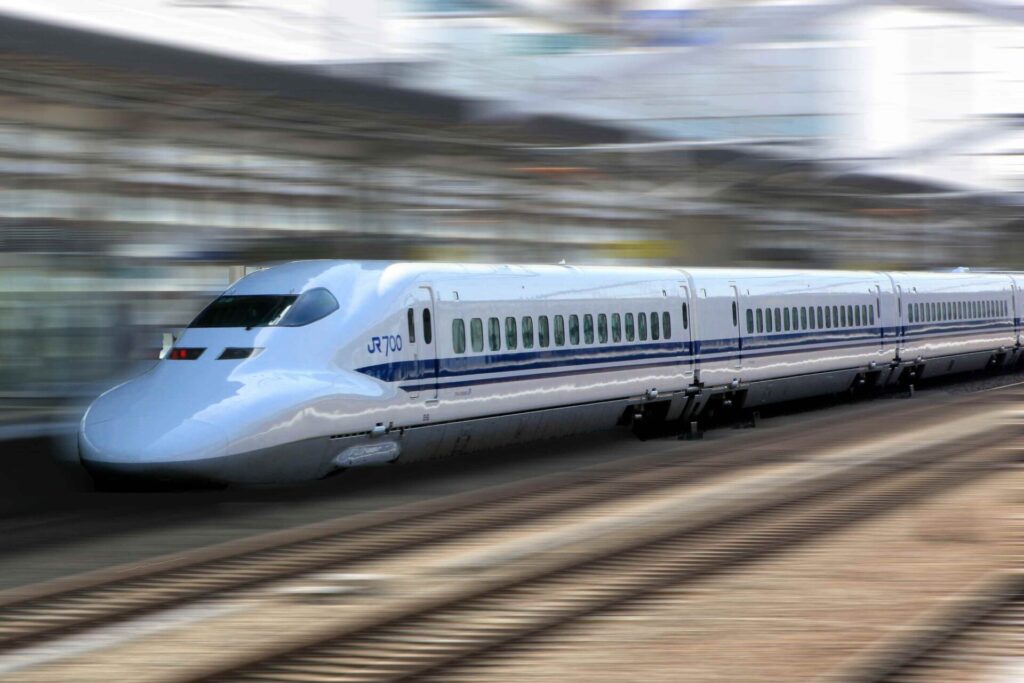
Purchasing a Japan Rail Pass allowed travel on trams, buses and underground as well as on the famous Shinkansen, the Bullet train, which they took from Tokyo to Kyoto. Immaculately clean outside and in, no litter anywhere!
In Hiroshima, we marvelled at pictures of the impressive Peace Memorial Park, but were sobered by seeing the ruins of Genbaku Dome, one of the few buildings left standing when the U.S.A. dropped the atomic bomb during WWII.
Mark shared many amusing anecdotes! Osaka is a foodie’s paradise. Menus, yes, but choices selected from plastic facsimiles in windows displays is common! Fish, chosen live from a tank can be served raw! No-one in Japan is overweight. School children are not allowed packed lunches or snacks, just food cooked fresh on the school premises. Showing a picture of a digitally operated toilet and describing its functions, Mark had our group chuckling as did his wife Anne when she described their experience visiting an Onsen, a natural hot spring of 25+ degrees!

Famed for its Cherry blossom, that can flower as early as January in the south and as late as May in Hokkaido in the north of Japan, no talk would be complete without stunning photos which we all admired!
Thank you Mark and Anne.
Malaysia (November 2025)
Our second meeting of this academic year had us returning to Malaysia, but to a very different area than our talk last month. Malaysia occupies part of the Malay peninsula and includes the island of Borneo. But member Adrian and his wife discovered west Malaysia, and we learned how different that can be.
He briefly told us that since the 18th century Malaysia had been subject to the rule of the British Empire then during World War 2 was occupied by Japan and finally gained its independence in 1957.
Their tour organised through Trailfinders, began in Penang state where they enjoyed the luxury of a quality hotel with time to recover from jetlag!


From there they travelled by coach to Cameron Highlands, a popular hill station where strawberries are grown on a huge commercial basis as is tea with many workers being Bangladeshi. Tea picking is under threat of being mechanised and his picture of a plantation showed a rather dilapidated machine in the foreground!
The third centre was Kuala Lumpur, the capital city. Vibrant and colourful as it was Chinese New Year, so red lanterns festooned many streets. A highlight visit was to Batu Caves, a little north of Kuala Lumpur. These limestone caves formed over 400 million years ago, contain many Hindu temples and an enormous golden statue of deity Murugan greets visitors at the entrance.


Their tour ended in Malacca, that has grown from a fishing village into one of the most important ports in the far east. It was to help traders that the British had persuaded the country to drop the Arabic script in favour of the Latin script and to aid literacy. The official language is now Bahasa Malaysia, although English is the second language. We were shown a couple of humorous signs that had been translated and spelled phonetically!
Another great talk regaled by Adrian with enthusiasm and humour that everyone enjoyed and had some members reliving their experiences in Malaysia.
Borneo (October 2025)
On Thursday 2nd October it was lovely to welcome new members and returnees to the first Travel Talk of this academic year.
Member Tony Winster gave a fascinating talk about the time he and his wife spent exploring Borneo, the 3rd largest island in the world, having had a chequered history and been at one time under British control. They organised their trip primarily to climb Kota Kinabalu 4095m and experience the area of Sabah which, along with Sarawak, is one of the East Malaysian states.
He showed photos of the terrain they covered, the accommodation they experienced halfway and near the summit. All the native people were very helpful and friendly throughout their trip.


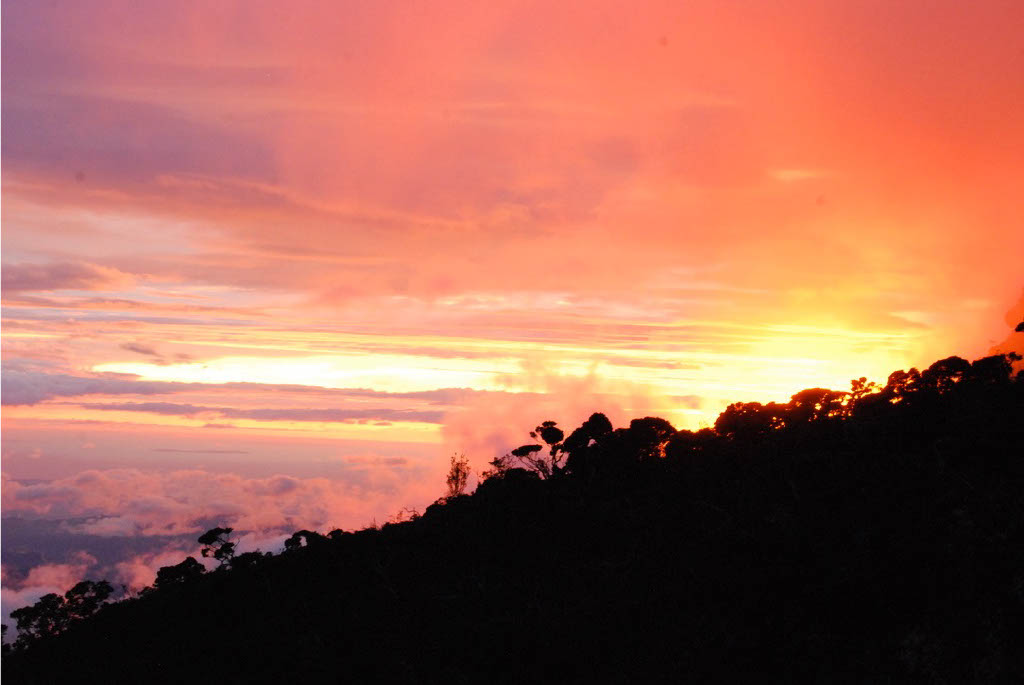

After this climbing adventure they explored the rainforest area, and we learned how deforestation of trees grown for their wood has given way to Palm oil tree planting as these trees fruit after 2 to 3 years providing bigger profits than the original logging industry!
This is a very political topic which he illustrated by relating how chocolate growing farmers can be exploited by persuasive agents of companies into relinquishing control over their farms to grow palm oil trees benefitting companies with big profits. That got us all thinking!
They sailed to Turtle Island to learn about turtle conservation and they saw monkeys and listened to birdsong in the stillness of the forests. So it was trip of a great mixture with which he enthralled us.
Cruising the Mosel (March 2025)


Our final talk this academic year gave us a taste of a cruising experience along the Mosel, as the Germans spell it, not the Moselle as we tend to! Member David Barnes began by sharing many useful tips to note when choosing a river cruise and we saw pictures of varying standard cabins and learned how the bridge and navigational system on board is retractable for going under bridges, often very necessary as these ships have just a 1 metre draught. Some cruises move by night. Fortunately, their Saga one didn’t so they benefitted seeing everything in daylight!
To understand the context of what he and his wife, Joy saw on this cruise we needed to know how Germany developed from the Roman Empire to the present day, so he showed very informative, detailed maps and explained clearly how borders with other countries changed under Papal influence, Prussian dominance and political wars within Europe until unification on 3rd September 1990! Fascinating to learn about Germany’s history more than just WW1 and WW2 that tends to be taught in schools!
On to the cruise! Beautiful pictures of a very meandering river beginning in Trier, the centre of winemaking in that area. We gasped at the almost vertical rows of vines ascending steep hillsides. Passing picturesque villages, Piesport and Cochem, being two, many with ruined castles on hills, the result of the marauding French, they were able to disembark almost daily and didn’t need organised excursions because sights were walkable from the ship. Pretty Bernkastel-Kues, as its name translates, connects bear with wine and is the second largest wine producing town. Traben-Trarben like Bernkastel-Krues is two towns straddling the river and situated on a tight oxbow bend. Upon reaching Koblenz they rounded Deutsches Eck into the Rhine, busier with cargo vessels and faster flowing. Passing Boppard and into the beautiful, narrower Rhine Gorge, with hillside castles in-tact, their ship sailed past Pfalz Island with its fascinating, historic Toll Castle which functioned as its name suggests, past the renown Lorelei Rock, to Bingen and into Rudesheim to disembark and end the cruise they agree was by far the best river one they have done! A great recommendation for our group!
Fez to Sahara (February 2025)


February’s Travel Talk transported our group to Morocco where Martin Harriss & his wife, Rosemary spent an adventurous time touring between those two places. He had researched and produced a very detailed, informative presentation which captivated us all and had everyone chuckling at his anecdotes and at some amusing pictures! Martin’s introductory map showed the Sahara (its name means desert) extending across the north of Africa encompassing Egypt and Libya entirely and other countries partially. Morocco has a tiny area! Having independently booked flights to Fez, their personalised tour was organised separately with Fleewinter! In Fez, famous for its leather production, they watched men knee high in colourful dye vats, but resisted the temptation to purchase anything at the retail outlet, common to all tourist sites in Morocco! Tourists can be tempted to part with their money in Moroccan towns by snake charmers, spice sellers, pottery stalls, Fez sellers, hats, basketry and, if not careful enough, pick-pocketers! But that could happen anywhere, even to the most cautious intrepid traveller! They never felt threatened, always confidently safe. A riad is a traditional Moroccan house with an interior courtyard and many have been converted into hotels with a covered courtyard, for sitting in to eat or drink peppermint tea and admire the amazing intricately decorated walls, carved wooden ones, some inlaid with mosaics, after the Islamic style. They stayed in several. In the cities some streets are too narrow for vehicles so endearing donkeys are used widely for transporting goods.
The colour of buildings in many country towns is unique because local building materials are used. Morocco has a lot of UNECSO world heritage sites. Possibly the most famous and best example of this fact is Ait-Ben-Haddou, which they saw. It was one location used in the filming of Laurence of Arabia.
After a train ride south through surprisingly subtle changing scenery, their real adventure began as their private guide Yousef drove over the snow capped Atlas Mountains into the desert. Roads were changeable with tarmac, dirt or stony mud surfaces round intricate bends and having few retaining walls at the edge. Too many highlights to relate here, but Berber country is very different. Yousef took them to meet his family and take tea with them. He observed prayer times, even stopping the four-wheel drive vehicle to do so in the dunes! Expecting a busy camp, they turned out to be the sole guests, but they were well fed and entertained by two young students and the tented accommodation was surprisingly comfortable. Camel riding in the dunes was a must, as was photographing the sunset. Martin’s spectacular photographs captured the desert scenery in different lights. It was a talk which entertained and educated us and one we all immensely enjoyed.
The Coolest Job in the World! (January 2025)

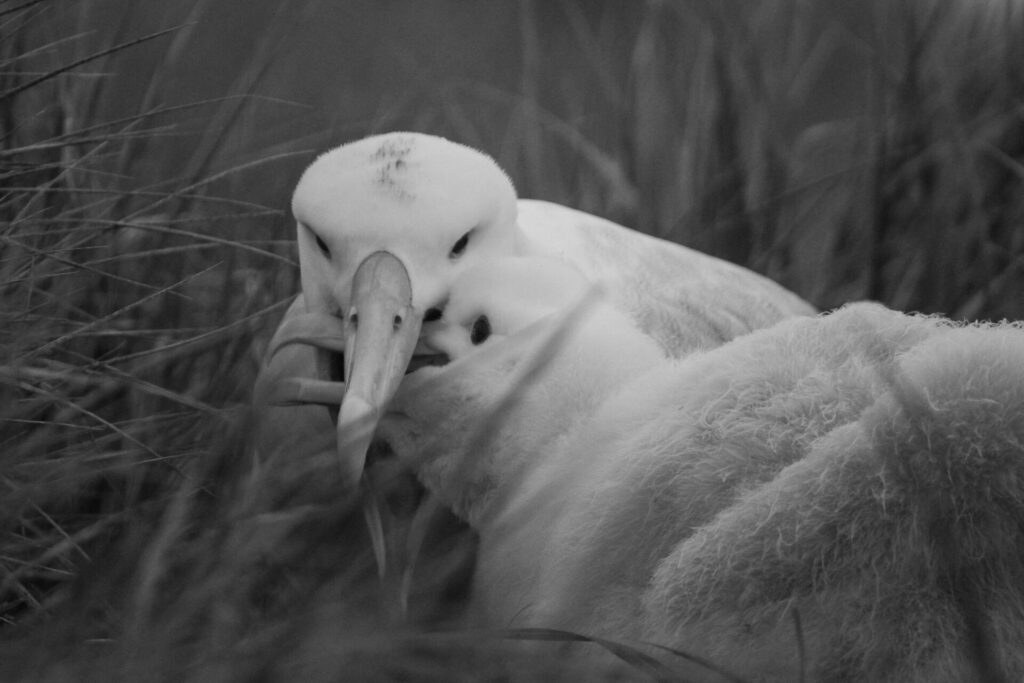

What a treat it was on a chilly day to listen to Freya Hatter tell us about her two experiences of working near the South Pole, in Antarctica. Having a degree in marine-biology and engaged in lab work at the British Antarctic Survey in Cambridge, she had the opportunity to go twice to Antarctica to further her research.
Freya began by showing us how Christmas was celebrated at Rothera station, the largest research station and the hub of UK activity. From her pictures and videos we saw around the station and learned about life living there. Surprisingly comfortable despite shower-water rationing! Apart from her own particular research on otoliths, she assisted with other research particularly the tracking and monitoring of birds like chinstrap penguins and skuas. Climate change has meant a considerable drop in skua numbers; more rain and their feathers become too wet so the birds get cold and die. There is less krill in the ocean. More filaments of micro-plastic are being identified in the stomachs of fish, penguins (eight species in Antarctica) seals and whales. Tourism increase in the southern oceans can’t have helped!
An afternoon of enjoyment that also made us think.
Experiencing Northern Cyprus (December 2024)
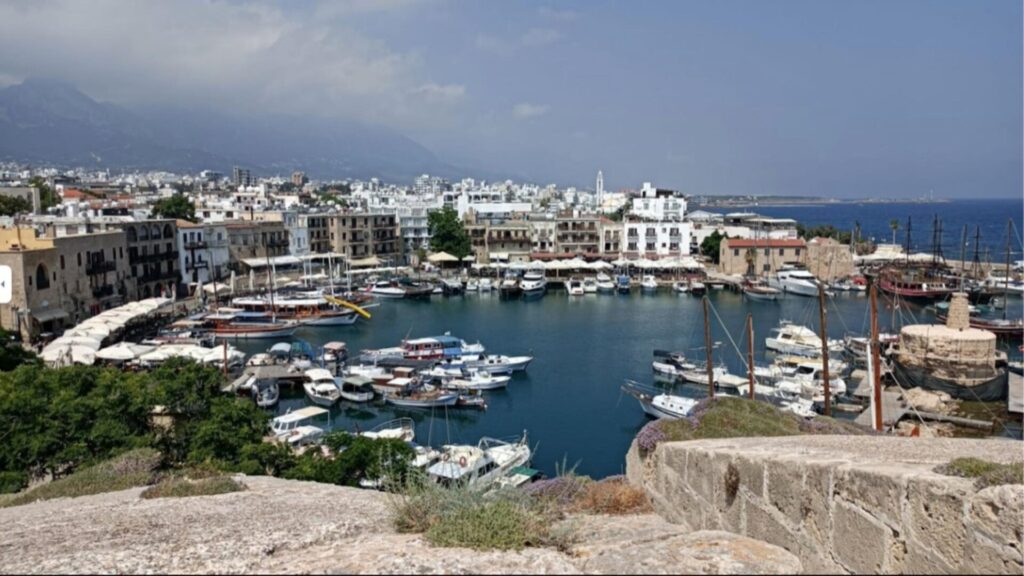
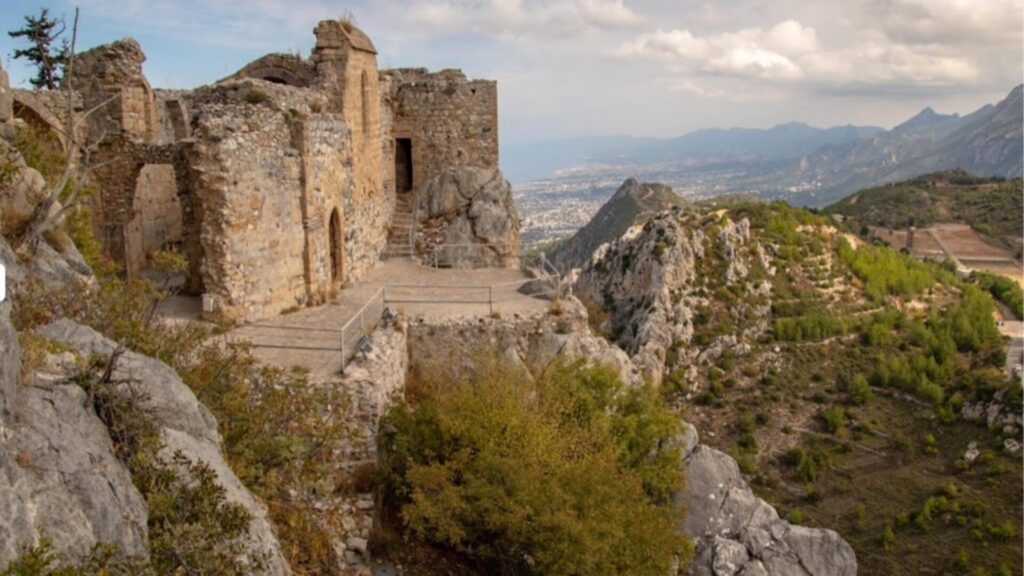

5th December was a grey day in Sawston, but we were treated to seeing pictures of the blue skies of Northern Cyprus, as member Adrian Barnard recounted the recent holiday he and his wife took there. They were on a comprehensive, organised tour staying in 4* hotels and visiting many sites.
Adrian began by showing a map of their route and telling us the history of how Cyprus had been occupied and the influence these countries had on its present culture. This Turkish half of Cyprus has been slow to realise that tourism could be the way forward and the majority of the beautiful sandy beaches weren’t developed as in the Greek south of the island. As well as being shown castles, churches, mosques and mosaics we learned some unusual facts! When the Turks invaded in 1974, farmers fled to the south leaving their farms and many donkeys that became a problem. They devoured any crops the inexperienced Turks tried to cultivate. The result being that a substantial compound fence was erected to control their wanderings! Very unsuccessful as the wily creatures have learned to negotiate the fencing and stand guard at cattle grids until fed! Nearly all dogs in Northern Cyprus have ear tags for identification.
Cyprus has some beautiful mosaics left by the Romans, but most are open to the elements, to be stood upon or lifted as souvenirs, only recently has one been covered for preservation! What a contrast with the southern Greek half of the island.
Whatever happened to Yugoslavia? (October 2024)


“Whatever happened to Yugoslavia?” was the title of the first Travel Talk this academic year, given by one of our members, Alan Oswald. He, with his wife, had travelled to Yugoslavia fifty years ago, but returned a year ago to visit Croatia and Montenegro. His informative presentation began with dated maps showing how the country had been divided. He followed those with photographs taken on their tour and detailed explanations of their experiences in each place. Should anyone wish to go there his advice was appreciated and for several members of our group who had been there it refreshed their memory! We learned, we laughed and we lived it too!